
Cataract Surgery: A Deeper Look
Here is some more information to help you understand your cataract surgery and your surgery experience
What happens during cataract surgery & what to expect?
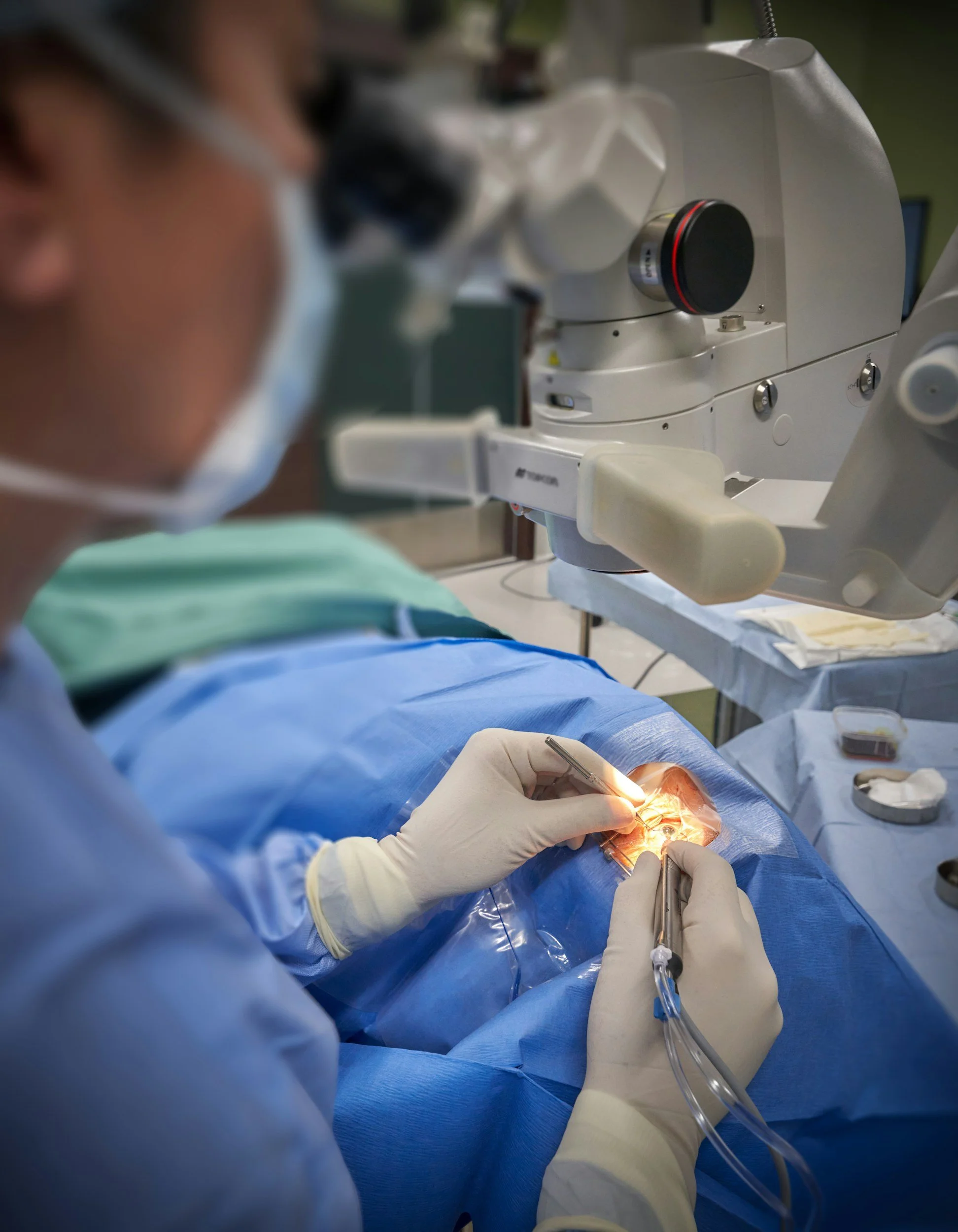
Cataract surgery is one of the most common and safest surgeries performed today. It usually takes 10–20 minutes and is done as an outpatient procedure, meaning you go home the same day. You’ll arrive at the surgical center, check in, and meet the care team. You will be expected to not eat 8 hours before your surgery.
You will be taken back to the pre-operative area. You will be gowned, and a nurse will place eye drops to dilate your pupil (make it bigger) and likely start an IV. You will then meet with your surgeon and your anesthesiologist. Once your eyes are dilated you will be walked back to the operating room where you will lie flat on an operating room bed.
When you are on the bed, your head will be stabilized so it is difficult for you to move and and a small device keeps your eyelids gently open—you won’t have to worry about blinking. Please keep in mind that you will receive sedation which will help with your anxiety. The eye and surrounding area are cleaned prior to sterile draping and placement of the eyelid speculum. Once prepped for surgery, a drape will be used to cover your face and the eye not having surgery.
During the surgery you will remain laying flat and a bright microscope light shines over your face. You’re awake, but the eye is numb, and you may receive medication to help you relax. Some people drift off to sleep during the surgery. You will not be able to “see” the surgery even though you may be awake. Your eye is not able to focus that close up, and you will mostly see shapes and colors moving around. You will not feel pain, but you may feel pressure occasionally and fluid may run down the side of your face under the drape.
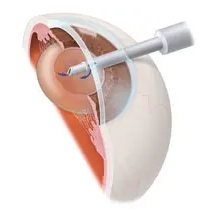
The surgeon makes a very small opening at the edge of the cornea (the clear front part of the eye). This incision is so tiny that it usually seals on its own without stitches. They are usually the size of the tip of a ballpoint pen and a small fraction of the length of your pinky finger nail. A tiny probe is inserted through the incision. Using ultrasound energy, it breaks the cloudy lens (the cataract) into small pieces, which are then gently suctioned out. You don’t feel pain—just some pressure or movement.
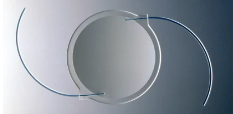
Once the natural cloudy lens is removed, the surgeon places a clear artificial lens (IOL) into the same place. This new lens stays in your eye permanently and should improve your vision. The surgeon removes the instruments, and the incision usually seals naturally. Occasionally a suture may be placed. An eye shield may be placed for protection.
You’re taken to a recovery area for a short time before going home. Your vision may be blurry at first, but most people notice improvement within hours to days. You’ll use prescription eye drops for a few weeks. Most people return to normal activities quickly, avoiding heavy lifting or strenuous activity for a bit. We will ask that you sleep with an eye shield for the first 3 days after surgery.
What are the risks, benefits, and alternatives of cataract surgery?
Like any surgical procedure, cataract surgery carries some risks, although serious complications are uncommon. Possible problems include infection or bleeding inside the eye, as well as ongoing swelling either in the front of the eye or deeper inside. Some patients may develop swelling of the retina—the light-sensitive nerve layer at the back of the eye—which can affect vision. In rare cases, the retina can detach from the back of the eye, a serious condition that requires prompt treatment. Other risks include damage to nearby eye structures, persistent eye pain that does not improve with over-the-counter medications, or visual symptoms such as blurred vision, glare, halos around lights, or dark shadows in the field of vision. Very rarely, partial or complete vision loss can occur. The artificial lens implant (called an intraocular lens, or IOL) placed during surgery may also shift out of position and require additional treatment. It is also important to understand that cataract surgery can only improve vision loss caused by cataracts and will not restore vision lost from other eye diseases such as macular degeneration, glaucoma, or diabetic retinopathy. (https://www.aao.org/eye-health/diseases/what-is-cataract-surgery)
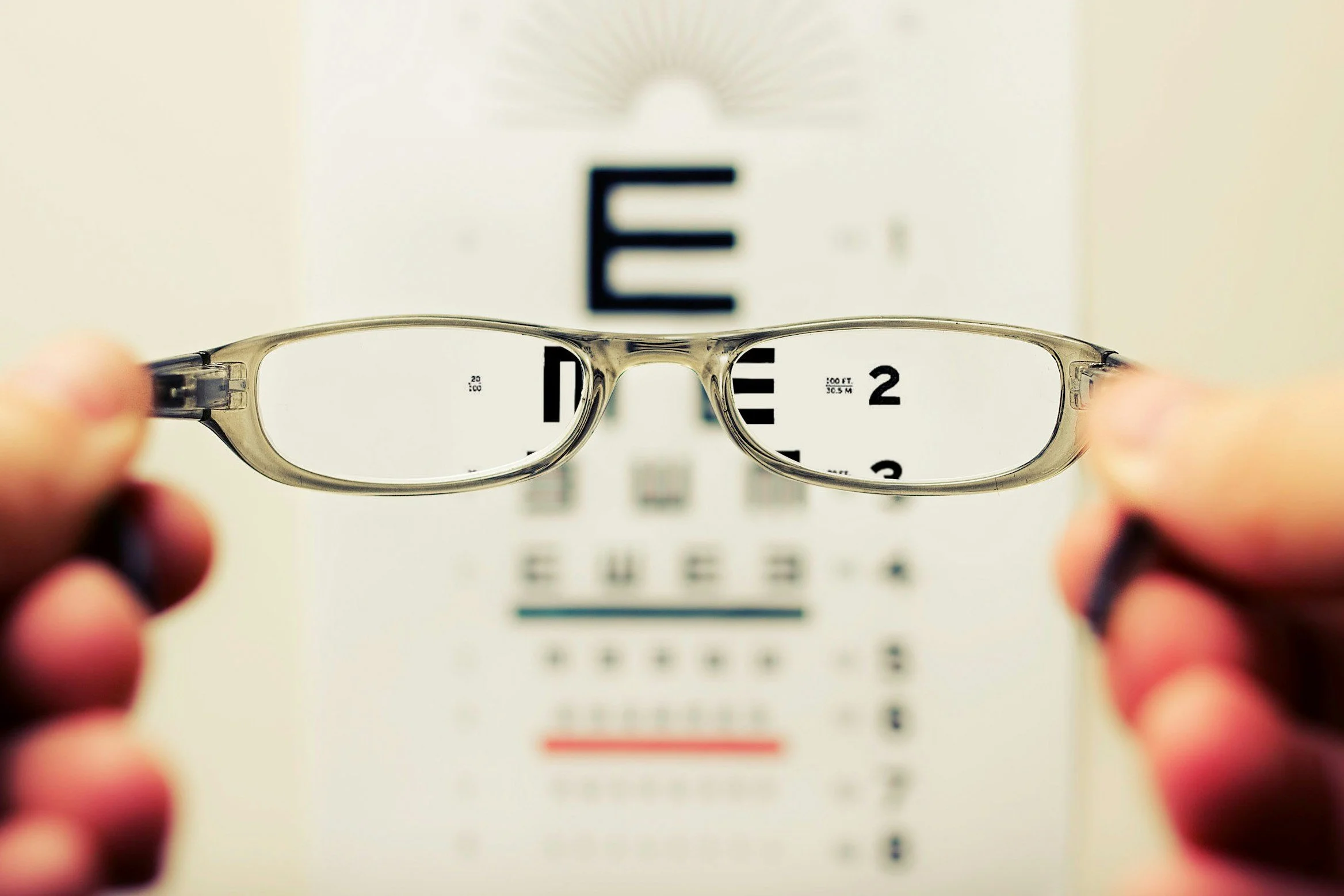
Given the risks, listed, why would you go through with cataract surgery? The potential for blindness with surgery is a scary thought. Well the answer is that you should only have cataract surgery when your vision is negatively impacting your quality of life and ability to function, and other means of correction, mainly glasses, have failed to improve things. The alternative to cataract surgery is no surgery or attempts to change glasses. However, there will come a point when glasses will not improve your vision, and your vision will continue to decline. If you chose to not have surgery, your vision will remain the same in the short term, but will ultimately get worse. Cataracts by themselves are the number one cause of blindness in the world (https://www.who.int/news-room/fact-sheets/detail/blindness-and-visual-impairment, https://pubmed.ncbi.nlm.nih.gov/29032195/). It is a “reversible” blindness, which means that if cataract surgery is performed, vision can be restored. Many people present to our office with a need for cataract surgery when they find that their vision leads them to failing the DMV drivers test which requires a 20/40 or better visual acuity. In general, based on the preferred practice patterns of the American Academy of Ophthalmology, 20/30 to 20/40 is a good benchmark best corrected visual acuity to indicate visual disability enough to justify the risk of cataract surgery. (https://www.aaojournal.org/article/S0161-6420(21)00750-8/fulltext)
When it is time for cataract surgery, rest assured that is it is a “safe” surgery with reproduceable results. There isn’t a single universally agreed-upon “safest” surgery, that said, cataract surgery is widely regarded as one of the safest and most impactful surgeries in the world, and it is often cited by physicians and public-health experts for several reasons. Over 3.8 million cataract surgeries are performed in the US annually (https://jamanetwork.com/journals/jama/article-abstract/2832707), and these numbers are going up every year due to our aging population (https://jamanetwork.com/journals/jama/article-abstract/2832707).
From a safety standpoint, modern cataract surgery has an extremely low complication rate when performed by trained surgeons. Serious complications such as infection or permanent vision loss are rare, and the procedure is typically done under local anesthesia, meaning patients remain awake and avoid the risks of general anesthesia. The surgery is brief—often 10 to 20 minutes—and most patients go home the same day and recover quickly.
In terms of impact, cataract surgery restores sight, which profoundly affects quality of life. Improved vision allows people to read, drive, work, and live independently, and it significantly reduces the risk of falls, injuries, and depression.


Do cataracts come back?
Cataracts do not come back. But some of the microscopic cells from the lens can continue to grow after cataract surgery and form scar tissue. If you think about it, your body will scar around anything you put in your body: dental implants, pacemakers, and hip replacements to name a few examples. The same is for your lens implant.
After cataract surgery, it is possible for vision to become cloudy or blurry again weeks, months, or even years later. This is a common and well-recognized condition called posterior capsular opacification (PCO). It is sometimes referred to as a “secondary cataract” or “scar tissue,” although it is not a true scar like one on the skin. PCO occurs after the eye has healed from surgery and happens when a thin, clear membrane inside the eye—called the posterior capsule—becomes cloudy over time. This is very common and can occur ins 25% of eyes that have cataract surgery. (https://eyewiki.org/Posterior_Capsule_Opacification)
The posterior capsule acts like a transparent pocket that holds the artificial lens implant (intraocular lens, or IOL) in the correct position. Before cataract surgery, it also held the eye’s natural lens, which later became cloudy and was removed. When this capsule becomes cloudy, light can no longer pass through it clearly, leading to symptoms such as blurred or hazy vision, glare, or reduced sharpness, similar to the vision problems caused by the original cataract.
If PCO affects vision, it can usually be treated quickly and safely with a simple laser procedure known as a posterior capsulotomy, or YAG laser capsulotomy. During this outpatient procedure, the doctor uses a laser to create a small opening in the cloudy capsule, allowing light to pass through clearly again. The procedure is painless, does not require an incision, and typically restores clear vision soon afterward. There are risks to the procedure, such as damage to the lens implant, shifts in the lens implant, and retinal detachment (just as with cataract surgery), but chance of these occurring is very low. As with any surgery or procedure, you should only move forward if you feel your symptoms are significant enough (blurry vision) to justify having a YAG laser performed.
Frequently Asked Questions
-
We offer a range of solutions designed to meet your needs—whether you're just getting started or scaling something bigger. Everything is tailored to help you move forward with clarity and confidence.
-
Getting started is simple. Reach out through our contact form or schedule a call—we’ll walk you through the next steps and answer any questions along the way.
-
We combine a thoughtful, human-centered approach with clear communication and reliable results. It’s not just what we do—it’s how we do it that sets us apart.
-
You can reach us anytime via our contact page or email. We aim to respond quickly—usually within one business day.
-
We offer flexible pricing based on project type and complexity. After an initial conversation, we’ll provide a transparent quote with no hidden costs.
-
Collaborative, honest, and straightforward. We're here to guide the process, bring ideas to the table, and keep things moving.